
Kidney Failure Care
Kidney Failure (ESRD) Treatment in Secunderabad — Three Options, One Expert Team
A diagnosis of kidney failure — or being told your kidneys are no longer able to sustain your body without support — is one of the most serious things a person or a family can hear. If you are reading this for yourself or for someone you love, the first thing to understand is that kidney failure is a life-changing diagnosis, but it is not a choice between treatment and nothing. There are three established treatment options — all of which are available at the KIMS Nephrology and Transplant Institute in Secunderabad — and the right choice depends on your specific situation, your health, and your goals.
KIMS has one of South India's most experienced kidney failure programmes, with over 1,500 kidney transplants performed and a 24/7 dialysis unit that supports patients at every stage — including the most critically ill who need continuous ICU dialysis. Our transplant, nephrology, and dialysis teams work as one unit, so whatever path you take, you have the same coordinated team guiding you throughout.
At a glance
Condition
Kidney Failure — End-Stage Renal Disease (ESRD) / Stage 5 CKD
What it means
The kidneys have lost 85–90% or more of their function and can no longer sustain life without treatment. eGFR typically below 15 ml/min/1.73m².
Three treatment options
1. Haemodialysis | 2. Peritoneal Dialysis (home-based) | 3. Kidney Transplant
★ Best long-term outcome
Kidney transplant — better survival, better quality of life, and freedom from dialysis sessions. Eligible patients are encouraged to pursue transplant evaluation early.
KIMS transplant programme
1,500+ kidney transplants · Live donor · Cadaveric · ABO-incompatible · Paediatric · NOTTO & TSTA registered
24/7 emergency dialysis
Round-the-clock haemodialysis + CRRT (ICU dialysis) available at KIMS Secunderabad
Home dialysis
CAPD training programme — learn to dialyse at home with KIMS support
ABO-incompatible
Fewer than 20 centres in South India offer this — transplants across blood group barriers
Insurance
Aarogyasri (PMJAY) · CGHS · EHS · All major private insurance
Appointments
040 - 44885000 · assistance@kimshospitals.com — respond within 24 hours
What is kidney failure (ESRD)?
Kidney failure — also called End-Stage Renal Disease (ESRD) or Stage 5 Chronic Kidney Disease — occurs when the kidneys have lost approximately 85 to 90 percent of their filtering function. The eGFR (estimated Glomerular Filtration Rate) falls below 15 ml/min/1.73m². At this level, the kidneys can no longer remove enough waste, control fluid balance, or maintain safe electrolyte levels to sustain life without medical intervention.
ESRD is almost always the final stage of a long-standing kidney condition most commonly chronic kidney disease caused by diabetes or high blood pressure, or less commonly glomerulonephritis, polycystic kidney disease, or recurrent kidney infections. In most patients, ESRD does not arrive without warning it develops gradually over months or years, giving time to plan and prepare. However, in acute presentations severe AKI, sudden decompensation, or a patient who has not been under specialist care it can present as a medical emergency requiring immediate dialysis.
If a patient with known kidney disease suddenly becomes confused, extremely breathless, has markedly reduced or no urine output, or is in severe pain — go to KIMS Emergency immediately or call 040 - 44885000. Severe hyperkalaemia (dangerously high potassium), uraemia (waste build-up affecting the brain), and pulmonary oedema (fluid in the lungs) are life-threatening complications of untreated kidney failure that require emergency treatment.
Symptoms of Kidney Failure (ESRD)
Kidney failure symptoms occur when the kidneys can no longer remove waste or maintain fluid balance. Many symptoms develop gradually and are often mistaken as normal until late-stage disease.
Severe, unrelenting fatigue — inability to perform daily activities
Marked swelling in legs, ankles, and around the eyes due to fluid retention
Shortness of breath at rest or minimal exertion (fluid in lungs)
Nausea, vomiting, and complete loss of appetite due to uraemic toxins
Confusion, difficulty concentrating, or altered mental status
Severe itching without skin disease (uraemia and phosphate build-up)
Muscle cramps, especially at night due to electrolyte imbalance
Metallic or ammonia-like taste in the mouth
Markedly reduced or absent urine output
Chest pain in severe cases due to uraemic pericarditis
The three treatment options for kidney failure at KIMS
Kidney failure is a permanent condition — the kidneys do not recover at ESRD. But life continues — and with the right treatment, it can continue well. Every patient with ESRD must choose between three forms of renal replacement therapy. At KIMS, all three are available within the same institute, managed by the same team, without any need to transfer to a different hospital.
Option 1 — Haemodialysis (HD)
Haemodialysis is the most common form of dialysis worldwide. During a session, blood is drawn from the body through a vascular access point (an AV fistula in the arm — or, in the early stages, a tunnelled catheter), passed through a dialysis machine that filters waste and excess fluid, and returned to the body. Each session takes 3 to 5 hours. Most patients require three sessions per week. The KIMS Dialysis Centre in Secunderabad operates 24 hours a day, 7 days a week. We have dedicated hepatitis B-segregated bays, certified reverse osmosis water treatment, strict single-use disposables policy, and NABL-accredited water quality monitoring. Bedside dialysis is available for patients who cannot be safely moved to the dialysis unit. Emergency dialysis is available at any hour without prior appointment. What life on haemodialysis looks like: Three visits to KIMS per week, each lasting 3–5 hours. Strict fluid restriction between sessions (typically 1–1.5 litres total daily). Dietary restrictions — low potassium, low phosphate, controlled protein. Regular blood tests to monitor toxin clearance and adjust the dialysis prescription. With well-managed dialysis, patients can work, travel, and live active lives — though the schedule requires adaptation.
Option 2 — Peritoneal Dialysis (CAPD) — dialysis from home
Peritoneal dialysis uses the body's own peritoneal membrane — the lining of the abdomen — as a natural filter. A soft tube (Tenckhoff catheter) is placed through the abdominal wall under local anaesthesia. A sterile dialysis fluid is infused into the abdomen through this tube, allowed to sit for a dwell period while waste crosses from the blood into the fluid, then drained out and replaced. This cycle is performed 4 times per day (CAPD — Continuous Ambulatory Peritoneal Dialysis) or automatically overnight by a machine (APD — Automated Peritoneal Dialysis). The major advantage of peritoneal dialysis is independence. Once trained at KIMS — a process that typically takes 1 to 2 weeks of supervised sessions — the patient performs dialysis at home, on their own schedule, without hospital visits. KIMS provides ongoing nursing support, 24-hour emergency phone access, regular outpatient reviews, and home visits during the training period. For patients who live far from a dialysis centre, or who value independence and flexibility in their daily life, peritoneal dialysis is a medically equivalent alternative to haemodialysis with significant quality-of-life advantages.
Option 3 — Kidney Transplant ★ Best long-term outcome
Kidney transplant is the optimal treatment for eligible patients with ESRD — providing better survival, better quality of life, freedom from dialysis sessions, and better long-term outcomes than either form of dialysis. KIMS is one of South India's most experienced kidney transplant centres, having performed over 1,500 transplants — including cases that most centres in the region cannot offer. In a kidney transplant, a healthy kidney from a donor is surgically placed in the recipient's lower abdomen, where it begins filtering the blood. The original failed kidneys are left in place in most cases. The new kidney's ureter is connected directly to the recipient's bladder. Most transplanted kidneys begin producing urine within minutes to hours of being connected to the blood supply. Live donor transplant: A family member — parent, sibling, spouse, or adult child — donates one healthy kidney. The donor retains full kidney function with their remaining kidney. Live donor kidneys begin working immediately after transplant and have the best long-term outcomes. The donor undergoes thorough independent medical and psychosocial evaluation at KIMS. Cadaveric (deceased donor) transplant: A kidney from a brain-dead donor is retrieved, matched using blood group and tissue typing, and transplanted. KIMS is NOTTO-registered and TSTA-empanelled, participating in the national organ sharing network. Patients are placed on the waiting list after full evaluation. ABO-incompatible transplant: KIMS is one of fewer than 20 centres in South India performing transplants across blood group barriers. Using desensitisation (plasmapheresis to remove incompatible antibodies, followed by immunotherapy), patients who have willing family donors but incompatible blood groups can still receive a transplant. This opens transplantation to patients who would otherwise have no eligible donor.
Dialysis vs Kidney Transplant — at KIMS Secunderabad
This is the most important comparison for ESRD patients. Families often search “dialysis vs transplant Hyderabad”. This table provides a clear, evidence-based view of all three treatment options available at KIMS.
| Factor | Haemodialysis | Peritoneal Dialysis | Kidney Transplant ★ at KIMS |
|---|---|---|---|
| How it works | Blood filtered by machine 3x/week | Abdomen used as filter, done at home daily | Healthy kidney placed surgically — filters continuously |
| Location | KIMS dialysis centre | At home after training at KIMS | Surgery at KIMS — then outpatient follow-up |
| Survival (10 years) | Significantly lower survival | Similar to HD | 85%+ alive at 10 years with live donor transplant |
| Quality of life | Moderate — schedule-bound | Good — independent and flexible | Excellent — near-normal life |
| Diet restrictions | Strict | Moderate | Near-normal after first year |
| Fluid restriction | Strict (1–1.5L/day) | Moderate | Near-normal after first year |
| Freedom of travel | Limited by machine access | More flexible | Free to travel |
| Work & activity | Possible but schedule-limited | Possible — flexible schedule | Fully normal in most patients |
| Duration | Lifelong (unless transplant) | Lifelong (unless transplant) | 15–25+ years (live donor) |
| Blood thinners | Not required | Not required | Short term post-surgery |
| Who is eligible | Almost all ESRD patients | Selected patients — good abdominal wall & self-care | Medical evaluation required — not all eligible |
| At KIMS Secunderabad | 24/7 dialysis · ICU CRRT · Emergency support | Training programme · Home support · 24hr helpline | 1,500+ transplants · ABO-incompatible · NOTTO registered |
A kidney transplant is not a cure for the underlying disease — the original cause of kidney failure (diabetes, hypertension) still needs management. But a successful transplant replaces dialysis entirely: no more machine visits, near-normal diet and fluid intake, and a significantly better long-term survival outlook.
How KIMS prepares ESRD patients — the integrated care pathway
Kidney failure is best managed when dialysis preparation begins well before the kidneys fail — not as a crisis response when the patient collapses. At KIMS, once CKD reaches Stage 4, we begin the ESRD pathway.
Transplant evaluation begins at Stage 4
Tissue typing, blood group testing, cardiac and surgical assessment of the patient are initiated early. For patients with willing living donors, donor evaluation begins simultaneously so that transplant can occur immediately once Stage 5 ESRD is reached, avoiding delays.
AV fistula creation (for haemodialysis)
The preferred vascular access for haemodialysis is created at Stage 4 or early Stage 5, before dialysis is needed. This allows 6–8 weeks for maturation. Patients who start dialysis using a fistula have significantly lower infection and complication rates compared to catheter-based starts.
Dialysis modality choice — personalised decision
Nephrologists at KIMS discuss both haemodialysis and peritoneal dialysis in detail with every patient. The choice is tailored to lifestyle, home environment, distance from dialysis centre, and patient preference. There is no default modality — every decision is individualised with full clinical guidance.
Peritoneal dialysis catheter insertion
For patients choosing home dialysis, a Tenckhoff catheter is placed before kidney failure becomes critical. Training begins early at KIMS so that dialysis can start smoothly at home rather than as an emergency hospital admission.
Nutritional preparation
Our renal dietitian provides structured dietary counselling at Stage 4 CKD to slow uraemia progression, manage potassium and phosphate levels, and delay the need for dialysis initiation wherever safely possible.
Why choose KIMS Secunderabad for kidney failure care?
KIMS provides comprehensive kidney failure care across dialysis, transplant, and critical care — all within one integrated system led by a single nephrology team.
High-volume kidney transplant programme
KIMS has performed over 1,500 kidney transplants — including live donor, cadaveric, ABO-incompatible, and paediatric transplants. This is one of the highest volumes in South India and exceeds many other major Hyderabad centres.
ABO-incompatible transplantation capability
Fewer than 20 centres in South India perform transplants across blood group barriers. Using plasmapheresis-based desensitisation protocols, KIMS enables transplantation even when the only willing donor has an incompatible blood group — turning dialysis-dependent patients into transplant recipients.
All three modalities under one team
Haemodialysis, peritoneal dialysis, and kidney transplantation are all managed by the same nephrology team at KIMS Secunderabad. There is no need for hospital transfer as disease progresses — continuity of care is maintained from CKD to ESRD to transplant.
24/7 emergency dialysis & CRRT
Kidney failure emergencies can occur anytime. KIMS provides round-the-clock haemodialysis and ICU-based CRRT (Continuous Renal Replacement Therapy) for critically ill patients who cannot tolerate standard dialysis due to haemodynamic instability.
Class-100 laminar flow transplant operation theatres
Dedicated transplant operation theatres maintain Class-100 air quality — fewer than 100 airborne particles per cubic foot. This ultra-sterile environment reduces infection risk for immunosuppressed transplant patients during surgery.
Structured lifelong post-transplant care
Transplant care continues long after surgery. KIMS provides structured follow-up with scheduled visits, protocol biopsies at 3 and 12 months, immunosuppression monitoring, infection screening, and cardiovascular risk management. Transplant coordinators remain available for ongoing support.
Start Kidney Failure Care at KIMS
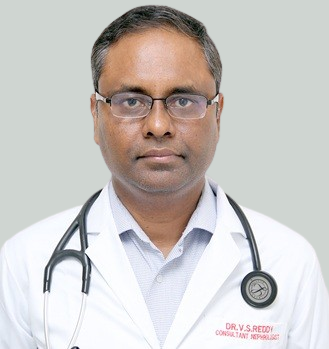
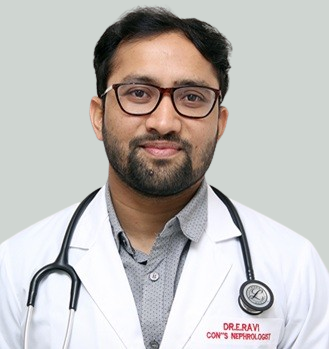
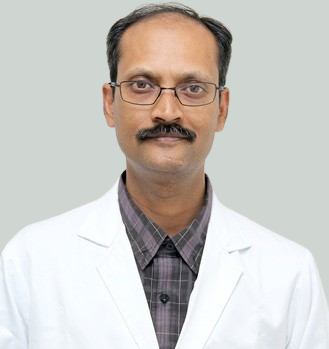
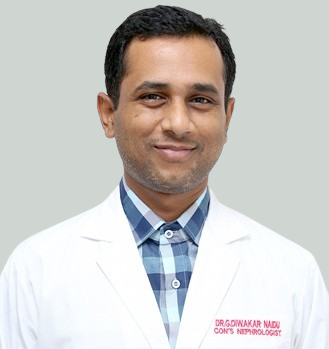
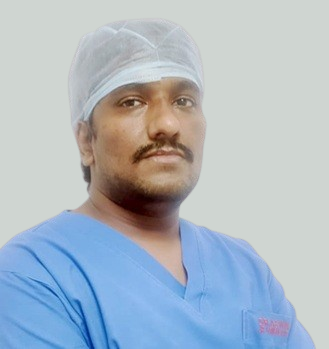
Our kidney failure specialists at KIMS Secunderabad
Our nephrology team manages CKD, ESRD, dialysis, and kidney transplantation as a single integrated unit, ensuring continuity of care across all stages of kidney disease.
Frequently Asked Questions
Yes — untreated kidney failure is fatal. Without treatment, the build-up of waste products (uraemia), dangerous electrolyte disturbances (particularly hyperkalaemia — high potassium causing cardiac arrest), and fluid overload become life-threatening within days to weeks, depending on the degree of remaining kidney function. However, kidney failure is manageable — all three treatment options (haemodialysis, peritoneal dialysis, and kidney transplant) allow patients to live full lives. The question is not whether to treat, but which form of treatment best fits the individual patient's situation and goals.
Yes — with appropriate treatment. Patients on well-managed haemodialysis at KIMS work full-time, raise families, travel, and pursue normal activities between their three weekly dialysis sessions. Peritoneal dialysis patients have even greater flexibility, performing their dialysis at home on their own schedule. Kidney transplant recipients — the majority of whom are eligible — experience the closest to normal life: near-normal diet, no dialysis schedule, and survival statistics comparable to many other long-term health conditions. Many KIMS transplant patients have lived with a functioning transplant for 15 to 20 years and lead entirely normal lives.
For eligible patients, kidney transplant provides better outcomes than long-term dialysis on almost every measure. A successful live donor transplant allows the recipient to stop dialysis entirely, eat and drink with far fewer restrictions, travel freely, and live with a significantly better long-term survival outlook. On dialysis, the kidney functions at roughly 10 to 15% of normal capacity — the body is never completely free of uraemic toxins, and cardiovascular risk remains high. That said, not every patient is eligible for transplant — age, heart function, infection history, and other factors are assessed at KIMS. If a patient is eligible, we actively encourage early transplant evaluation rather than indefinite dialysis.
With consistently good quality dialysis and careful management of blood pressure, fluid, nutrition, and medication, many patients live well on dialysis for 10, 15, or even 20 years or more. Survival depends significantly on age at start, the underlying cause of kidney failure, cardiovascular health, and adherence to the dialysis prescription and diet. At KIMS, every patient receives an individualised dialysis prescription based on regular blood test monitoring (urea reduction ratio, Kt/V) not a generic protocol which is the foundation of long-term dialysis adequacy.
Normally, kidney transplant requires compatible blood groups between donor and recipient a patient with blood group A can only receive from a group A or group O donor. ABO-incompatible transplantation allows transplantation across this barrier. Through a process called desensitisation in which plasmapheresis (a blood purification technique) removes the incompatible blood group antibodies from the recipient's circulation, followed by targeted immunotherapy — the immune system is made tolerant of the donor kidney. KIMS is one of fewer than 20 centres in South India with the expertise, infrastructure, and team experience to perform ABO-incompatible transplants safely. For patients whose only willing living donor has an incompatible blood group, this is the treatment that makes transplantation possible.
With modern immunosuppression protocols and careful follow-up, a live donor kidney transplant at KIMS can function for 15 to 25 years or longer. Deceased donor kidneys typically function well for 10 to 15 years. Long-term graft function depends significantly on: taking immunosuppressive medications consistently without any self-discontinuation, controlling blood pressure and blood sugar, attending regular follow-up appointments, and avoiding nephrotoxic substances including NSAIDs and contrast dye without nephrology clearance. KIMS's structured post-transplant programme — with defined monitoring schedules, protocol biopsies, and transplant coordinator support is specifically designed to maximise long-term graft function.
KIMS Secunderabad has performed over 1,500 kidney transplants — one of the highest volumes in South India — including live donor, cadaveric, and ABO-incompatible transplants. The institute is NOTTO-registered and TSTA-empanelled. Haemodialysis, peritoneal dialysis, CRRT, and kidney transplantation are all managed by the same team at the same campus — no hospital transfer required at any stage of the disease. KIMS is NABH and NABL accredited, recognised by Times Healthcare Achievers as the Best Hospital of the Year in Nephrology, and empanelled under Aarogyasri (PMJAY), CGHS, and EHS.
Yes. KIMS Secunderabad is empanelled under Aarogyasri (PMJAY) and CGHS, and accepts all major private health insurance plans including EHS. Under Aarogyasri, eligible patients can access haemodialysis, kidney transplant evaluation, and transplant surgery at subsidised or zero direct cost. Many private insurance plans fully cover dialysis as an ongoing treatment and kidney transplantation as a one-time procedure. Call the KIMS billing team on 040 - 44885000 or email assistance@kimshospitals.com to verify your coverage before starting treatment. We respond within 24 hours.