
Peritoneal Dialysis at KIMS Secunderabad — Home-Based CAPD and APD, No Needles, Freedom from Hospital Visits
At a glance — Peritoneal Dialysis at KIMS
- What makes PD different: Dialysis performed at home — using the body's own peritoneal membrane as the filter. No hospital visits for dialysis sessions. No needles. No blood circuit outside the body.
- PD types at KIMS: CAPD (Continuous Ambulatory Peritoneal Dialysis) — 4 manual exchanges per day · APD (Automated Peritoneal Dialysis) — overnight machine, freedom during the day
- Training programme: Structured KIMS PD nurse training: supervised exchanges at KIMS, then home visit follow-up. Most patients and carers achieve independence within 1 to 2 weeks.
- Residual kidney function: PD preserves residual kidney function better than haemodialysis — clinically important for long-term outcomes and quality of life
- Dietary freedom: Less strict fluid and potassium restrictions than HD — because PD provides continuous daily filtration rather than intermittent sessions
- Aarogyasri coverage: PD supplies covered under Aarogyasri (PMJAY) · CGHS and EHS also empanelled
- Transplant goal: Same KIMS nephrology team manages PD patients through to kidney transplant — 1,500+ transplants performed
- Appointments: 040 - 44885000 · assistance@kimshospitals.com
What is peritoneal dialysis — and why do some patients choose it over haemodialysis?
Peritoneal dialysis (PD) is a form of renal replacement therapy that uses the lining of the abdominal cavity — the peritoneal membrane — as a natural dialysis filter. Rather than circulating blood through a machine at a hospital, PD works by filling the abdominal cavity with a specially formulated dialysis fluid (dialysate) through a permanent soft catheter. Waste products and excess fluid from the surrounding blood vessels diffuse across the peritoneal membrane into the dialysate. After a prescribed dwell time, the used dialysate — now containing the removed waste — is drained and replaced with fresh fluid. This process is called an exchange.
Peritoneal dialysis is performed at home by the patient or a trained carer — not at a hospital. There are no needles, no blood circuit outside the body, and no three-times-weekly hospital visits. For patients who value independence, home-based care, or whose work or family circumstances make three hospital dialysis sessions per week impractical, PD offers a fundamentally different quality of dialysis life compared to haemodialysis.
Medically, PD provides continuous daily dialysis — removing waste and fluid gently throughout every day rather than in three intense four-hour sessions. This continuous gentle clearance is associated with better preservation of residual kidney function (the urine the failing kidneys still produce), more stable blood pressure, fewer dietary restrictions, and a gentler cardiovascular profile. PD is particularly well-suited to patients with significant heart disease, patients with poor vascular access for haemodialysis, and children with ESRD.
PD is not suitable for all ESRD patients. It requires a functioning peritoneal membrane, adequate abdominal space, no history of major abdominal surgery causing extensive adhesions, and the ability to perform or supervise exchanges at home. The KIMS nephrology team assesses PD suitability at every ESRD initiation consultation — many patients are offered a genuine choice between HD and PD.
CAPD and APD — two ways to do peritoneal dialysis
CAPD — Continuous Ambulatory Peritoneal Dialysis
CAPD is the manual form of peritoneal dialysis. The patient performs four exchanges per day — morning, midday, evening, and bedtime — each taking approximately 20 to 30 minutes. Each exchange involves: connecting a bag of fresh dialysate to the PD catheter, draining the used dialysate from the previous dwell, infusing 2 litres of fresh dialysate, disconnecting and sealing the catheter, and going about normal activities while the fluid dwells in the abdomen for 4 to 6 hours.
CAPD requires no machine and no electricity — making it viable anywhere, including areas with unreliable power supply. The four daily exchanges become a manageable routine for most patients within the first 2 to 3 weeks.
APD — Automated Peritoneal Dialysis
APD uses a small, portable automated cycling machine (a cycler) that performs multiple exchanges automatically overnight while the patient sleeps — typically 8 to 10 hours of exchanges during sleep, leaving the patient free during the day with either no or one manual exchange required.
The cycler delivers precisely timed exchanges, monitors dwell volumes and drain volumes, and alerts the patient if a drain is incomplete or an alarm condition occurs. Setup takes approximately 15 to 20 minutes at bedtime.
| Feature | CAPD | APD |
|---|---|---|
| Machine required | None — manual exchanges | Cycler machine — runs overnight |
| Exchange schedule | 4 exchanges per day, 20–30 min each | Overnight 8–10 hrs, free during day |
| Power dependency | None | Requires reliable electricity |
| Daytime freedom | 4–6 hour dwell periods between exchanges | Largely free during day |
| Best suited to | Remote areas, power-unreliable settings, retired patients, those who prefer no machine | Working patients, younger patients, those who value daytime freedom |
| Peritoneal membrane exposure | 4 exchanges/day × 365 days | Multiple overnight cycles — total exchange similar |
| Cost (consumables) | Lower | Higher (machine rental/purchase + cycler bags) |
| Both available at KIMS | Yes | Yes |
The PD catheter — the access point for home dialysis
Peritoneal dialysis requires a permanent soft silicone catheter surgically placed through the abdominal wall into the peritoneal cavity — typically a Tenckhoff catheter. The catheter insertion is a short surgical procedure performed under local anaesthesia with sedation or light general anaesthesia, taking approximately 30 to 45 minutes. At KIMS, catheter insertion is performed by the nephrology and urology team using either an open surgical technique or a laparoscopic (keyhole) approach — the laparoscopic approach allows direct visualisation of catheter placement and is preferred in patients with previous abdominal surgery.
After catheter insertion, a 2-week healing period is allowed before dialysis exchanges begin. This waiting period allows the catheter exit site to heal and the tunnel tract to seal, reducing the risk of leakage and infection at the exit site. Training begins during this 2-week window so the patient is ready to start full exchanges exactly when the catheter is mature.
Exit-site care tip:
The most important factor in preventing PD catheter infection is meticulous exit-site care — keeping the exit site clean, dry, and covered, and avoiding immersion in water until fully healed. The KIMS PD nurse provides detailed exit-site care instructions and reviews the exit site at every scheduled outpatient visit.
Peritonitis — the most important PD complication to recognise and report
Peritonitis — infection of the peritoneal cavity — is the most serious complication of peritoneal dialysis, caused by contamination of the PD system during an exchange.
⚠️ If your PD drain fluid is cloudy — even if you feel otherwise well — this is peritonitis until proven otherwise.
Do NOT wait. Contact KIMS on 040 - 44885000 immediately. Save the drain bag — the KIMS team will arrange to test the fluid. Early treatment prevents catheter loss. Delayed treatment can result in loss of the peritoneal membrane and permanent end to PD.
Symptoms are: cloudy dialysate drain fluid (the most reliable early sign), abdominal pain, fever, and nausea. KIMS provides every PD patient with a written emergency contact protocol and a laminated reference card listing the symptoms of peritonitis and the action to take. The KIMS PD nurse team is contactable during working hours, and the KIMS emergency line (040 - 44885000) is available 24/7.
At KIMS, intraperitoneal antibiotic training — including how to add antibiotics to dialysate bags at home for the initial treatment of mild peritonitis — is provided to every PD patient as part of the training programme.
Peritoneal dialysis vs haemodialysis — choosing between them
| Feature | Peritoneal Dialysis | Haemodialysis |
|---|---|---|
| Where performed | At home — no hospital visits for dialysis | Hospital or dialysis centre, 3x/week |
| Needles | None | Two fistula needles per session |
| Cardiovascular gentleness | Gentler — continuous slow filtration | More abrupt — fluid removal in 4-hour sessions |
| Residual kidney function | Better preserved | Declines faster |
| Dietary restrictions | Less strict — continuous filtration allows flexibility | Stricter potassium and fluid limits between sessions |
| Blood pressure stability | Generally more stable | Drops common during sessions |
| Flexibility and independence | High — dialysis fits around life | Structured around 3 fixed sessions per week |
| Risk of peritonitis | Present — requires vigilant technique | No peritonitis risk (different infection risks) |
| Abdominal surgery history | May be contraindicated if extensive adhesions | Not affected |
| Long-term membrane viability | Membrane may fail after 5–8 years in some patients | No membrane dependency |
| Travel | Highly travel-friendly | Requires advanced session booking |
| Aarogyasri coverage | Yes | Yes |
The KIMS PD training programme — from hospital to home
Peritoneal dialysis works only as well as the patient and carer who performs it. The KIMS PD training programme is designed to produce genuinely independent patients.
1. Supervised Training
Training at KIMS begins during the catheter healing period and is completed over 5 to 7 supervised sessions. Each session covers aseptic exchange technique, exit-site care, peritonitis recognition, and emergency contacts.
2. Home Transition Support
After discharge, the KIMS PD team follows up by telephone at 48 hours, at 1 week, and at 2 weeks. A home visit is arranged in the first month for patients who need additional support.
3. Monthly Monitoring
Thereafter, clinic visits at KIMS occur monthly for review of clinical status, fluid balance records, blood tests (urea, creatinine, electrolytes, etc.), and adjustment of PD prescription.
Why choose KIMS Secunderabad for peritoneal dialysis?
Structured PD training programme
Designed to produce genuinely independent patients. The programme covers every contingency: cloudy bags, incomplete drains, exit-site changes, and emergency contacts.
Both CAPD and APD offered
The choice is made based on lifestyle, power supply reliability, and personal preference. Many patients start on CAPD and transition to APD as their circumstances change.
Peritonitis management protocol
We train every patient to recognise and initiate treatment at home — including home intraperitoneal antibiotic addition for mild cases — reducing hospital admissions.
Same nephrology team to transplant
For transplant-eligible patients, we begin evaluation concurrently with PD initiation. We manage the entire transition from PD to transplant (1,500+ performed) without team handovers.
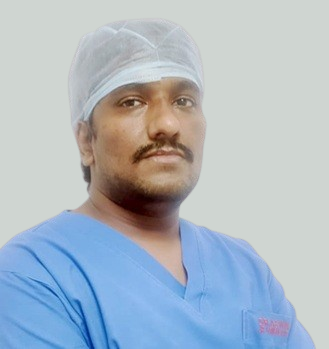
Our peritoneal dialysis team at KIMS Secunderabad



Frequently Asked Questions
Yes — peritoneal dialysis is designed to be performed safely at home by trained patients and carers. The KIMS PD training programme is specifically designed to equip patients with the skills and confidence for independent home exchanges. Most patients manage their PD successfully at home for years — returning to KIMS only for monthly nephrology review.
CAPD (Continuous Ambulatory Peritoneal Dialysis) is the manual form — the patient performs four exchanges per day. No machine is required. APD (Automated Peritoneal Dialysis) uses a cycler machine that performs multiple exchanges automatically overnight during sleep, leaving the day largely free. KIMS offers both.
Peritonitis is infection of the peritoneal cavity — the most serious PD complication. Prevention requires strict aseptic exchange technique, daily exit-site care, and immediate reporting of any cloudy drain fluid. KIMS trains patients to recognise peritonitis early and begin initial antibiotic treatment at home.
Yes — peritoneal dialysis supplies (dialysate bags, giving sets, etc.) are covered under Aarogyasri (PMJAY) at KIMS Secunderabad. KIMS is also empanelled under CGHS and EHS. Patients should bring their Aarogyasri card to the initiation appointment.
Not for dialysis sessions — that is the fundamental advantage. However, you will continue to attend KIMS for monthly nephrology review appointments to assess clinical status, fluid balance, and adjust your PD prescription. Exit-site reviews and transplant evaluation visits continue concurrently.
Most patients manage PD successfully for 3 to 7 years before the peritoneal membrane's filtration capacity declines. The rate of change is influenced by peritonitis episodes and individual characteristics. Patients who develop ultrafiltration failure transfer to haemodialysis or proceed to transplant.
Yes — peritoneal dialysis is one of the most travel-friendly forms of renal therapy. CAPD bags can be arranged to be delivered to destinations. APD patients can travel with their cycler machine, which is compact and airline-approved.
KIMS Secunderabad — structured PD training programme with supervised exchanges and home follow-up, both CAPD and APD offered, peritonitis home management training, Aarogyasri empanelled, same nephrologist from CKD to transplant, 1,500+ kidney transplants. NABH and NABL accredited.