
TULSA-PRO at KIMS Secunderabad — India's Only MRI-Guided Incision-Free Prostate Treatment
At a glance — TULSA-PRO specifics
- Full name: Transurethral Ultrasound Ablation — TULSA-PRO® (Profound Medical)
- Available in India: KIMS Secunderabad only — India's first and only TULSA-PRO centre
- Regulatory approval: FDA-approved (K191200, August 2019) · CE-marked (EU)
- Treats: Localised prostate cancer (low and intermediate risk) · Benign Prostatic Hyperplasia (BPH)
- No incision: Device passes through the urethra — no surgical cut anywhere on the body
- No radiation: Thermal ultrasound energy only — no ionising radiation
- MRI-guided: Real-time MRI throughout the entire procedure — surgeon sees exactly what is being treated
- Clinical trial outcome: Average 95% PSA reduction to 0.34 ng/ml (115-patient pivotal trial)
- 1-year outcomes: 75% regained erections firm enough for sex · 93% stayed pad-free · 100% no rectal injury
- Recovery & Appointments: Same-day/next-morning discharge · 040 - 44885000 · assistance@kimshospitals.com
What is TULSA-PRO and why is it different?
TULSA-PRO (Transurethral Ultrasound Ablation) is the most technically advanced prostate treatment available anywhere in India — and it is available only at KIMS Secunderabad. It is neither surgery nor radiation. No incision is made anywhere on the body. No external beam of radiation is aimed at the pelvis. Instead, a device the width of a finger is passed through the urethra — the urinary passage — into the prostate, and precisely directed ultrasound energy destroys prostate tissue from the inside out, guided at every moment by real-time MRI imaging.
The result: prostate tissue is ablated with millimetre precision, the urethra and rectum are actively protected by built-in cooling systems, and the neurovascular bundles — the nerve networks controlling urinary continence and erectile function — are preserved far more effectively than in conventional surgery or radiation. Most patients go home the same day or the following morning and resume normal activities within 2 to 5 days.
KIMS Secunderabad is India's first and only TULSA-PRO centre. This is not a regional claim. No other hospital anywhere in India — not in Mumbai, Delhi, Chennai, or Bangalore — offers TULSA-PRO treatment at KIMS. When a man in India with localised prostate cancer or symptomatic BPH wants this treatment, KIMS Secunderabad is the only option.
How TULSA-PRO works — step by step
TULSA-PRO ablates prostate tissue using the same principle as any ultrasound — but focused, directional, and at precisely controlled intensities that generate heat up to 86°C in the targeted tissue while leaving surrounding structures unharmed. The entire procedure takes place inside an MRI scanner:
| Stage | What happens |
|---|---|
| 1 — Pre-procedure planning | MRI of the prostate is reviewed. The KIMS urologist prescribes the exact zone of prostate tissue to be ablated — from a small focal tumour to the entire prostate gland. The urethra, rectum, sphincter, and neurovascular bundles are marked as protected structures. |
| 2 — Positioning | The patient lies inside the MRI scanner. A thin ultrasound applicator is passed through the urethra. A separate rectal cooling device is placed to protect the rectum from heat. Both the urethra and rectum are actively cooled throughout the procedure. |
| 3 — Ablation with real-time MRI | The applicator rotates inside the prostate, sweeping successive planes of ultrasound energy outward from the urethra. Real-time MRI generates temperature maps every 5 to 7 seconds — the surgeon watches the tissue temperature in real time and can pause, redirect, or stop at any moment. |
| 4 — Completion and recovery | When the prescribed ablation zone has been treated, the device is removed. A urinary catheter is placed and left for a few days while the treated tissue begins to resolve. The patient is observed for 4 to 6 hours and typically discharged the same day or next morning. |
| 5 — Follow-up | PSA blood test at 3 months — the primary measure of treatment success. MRI at 6 to 12 months to confirm ablation of treated tissue. If cancer recurrence is detected, TULSA-PRO can be repeated, or any other treatment option (surgery, radiation) remains available. |
Clinical outcomes — what the evidence shows
TULSA-PRO is FDA-approved based on the results of a global pivotal clinical trial involving 115 patients with localised prostate cancer treated at multiple centres internationally. The 1-year results are the most cited in patient decision-making:
PSA reduction
Average 95% reduction · Median post-treatment PSA: 0.34 ng/ml. The treated prostate tissue is producing negligible PSA — equivalent to a very low PSA after surgical removal.
Urinary continence
93% of men stayed pad-free. The urinary sphincter was protected by real-time MRI guidance — continence rates comparable to the best robotic surgeons.
Erectile function
75% of men regained erections firm enough for sexual intercourse. Nerve-sparing by MRI guidance preserves erectile function significantly better than surgery.
Rectal injury
100% — zero cases of rectal injury or fistula. The rectal cooling device and real-time MRI monitoring prevented any thermal injury to the rectum.
Return to normal activity
Most patients resumed normal activities within 2–5 days. No surgical recovery — no 4–6 week post-prostatectomy recovery period.
Who is eligible for TULSA-PRO?
TULSA-PRO is not appropriate for every prostate cancer or BPH patient. Eligibility is assessed by the KIMS urology team based on a combination of clinical criteria and MRI findings. General eligibility criteria:
- Prostate cancer: Localised (confined to the prostate), low to intermediate risk. PSA generally below 20 ng/ml. Gleason 6 (ISUP Grade 1) or Gleason 7 (ISUP Grade 2–3) with disease suitable for either whole-gland or focal ablation.
- BPH: Symptomatic enlarged prostate not responding adequately to medications, or patient preferring to avoid conventional surgical options. Prostate volume up to 250cc can be treated with TULSA-PRO.
- Ability to undergo MRI: No MRI-incompatible metallic implants. Patients with MRI-compatible implants are assessed individually.
- No prior definitive prostate radiation: TULSA-PRO can follow a previous DVIU or prostate biopsy, but is not used after external beam radiotherapy or brachytherapy.
KIMS performs a dedicated pre-TULSA-PRO assessment clinic: mpMRI of the prostate (to characterise the tumour and measure prostate volume), PSA, Gleason score review from biopsy report, uroflowmetry and IPSS for BPH patients, and a consultation with the KIMS uro-oncologist to discuss treatment planning and patient goals.
TULSA-PRO vs other prostate treatments — honest comparison
| Feature | TULSA-PRO | Robotic Prostatectomy | Radiation (EBRT) |
|---|---|---|---|
| Incision | None — through urethra | 3–5 keyhole ports | None |
| Radiation | None | None | Yes — external beam |
| Anaesthesia | Spinal or sedation | General | None (outpatient) |
| Hospital stay | Same day / 1 night | 1–2 nights | Outpatient x 25–35 sessions |
| Recovery | 2–5 days | 4–6 weeks | Late effects possible after months |
| Continence at 1 yr | 93% pad-free | 75–90% (surgeon-dependent) | 90–95% pad-free |
| Erectile function at 1 yr | 75% functional | 40–70% (surgeon-dependent) | 40–60% functional |
| PSA outcome | Avg 95% reduction | Undetectable (<0.1 ng/ml) target | Slow decline over 18+ months |
| Salvage if recurrence | All options open — repeat, surgery, radiation | Radiation if needed | Surgery (more complex) |
| Available in India | KIMS Secunderabad only | Multiple centres | Multiple centres |
This comparison is honest, not promotional. Robotic prostatectomy remains the established gold standard for most intermediate and high-risk prostate cancer. TULSA-PRO is the best option for men who: want effective treatment without surgery or radiation; have low to intermediate risk disease; value preservation of sexual function and rapid recovery above all other factors; and are prepared to accept close PSA follow-up monitoring.
Why KIMS for TULSA-PRO?
Experienced TULSA-PRO programme
KIMS has been performing TULSA-PRO procedures since the technology was introduced in India. The KIMS uro-oncology team — led by fellowship-trained urologists — has developed the pre-procedure assessment protocols, the treatment planning workflows, and the post-treatment surveillance programme that determine outcomes. The machine alone does not produce the results — the programme does.
Dedicated MRI suite
TULSA-PRO requires a dedicated MRI scanner — not a shared diagnostic scanner booked between patients. KIMS has the infrastructure to support TULSA-PRO as a planned surgical programme, not a one-off procedure.
Full uro-oncology backup
For prostate cancer patients, TULSA-PRO at KIMS is part of a complete uro-oncology programme — multidisciplinary tumour board review before treatment, robotic prostatectomy available if required, medical oncology for systemic therapy if needed. A patient choosing TULSA-PRO at KIMS is choosing a centre capable of managing every eventuality of their prostate cancer journey.
Honest eligibility assessment
Not every patient who asks about TULSA-PRO is eligible. KIMS performs a dedicated pre-procedure eligibility assessment — and if a patient is better served by robotic prostatectomy, radiation, or active surveillance, that is what is recommended. The goal is the best outcome for the individual patient, not the highest TULSA-PRO procedure volume.
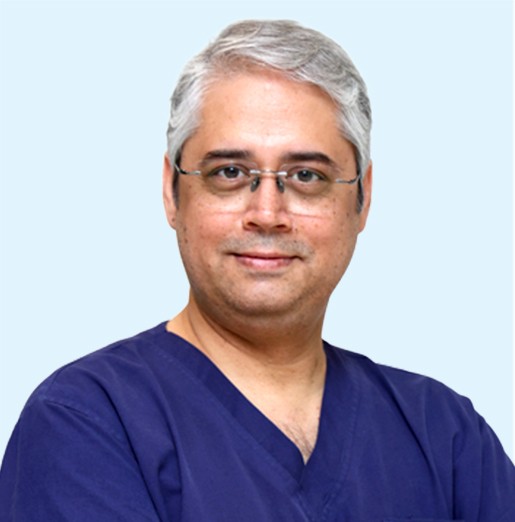
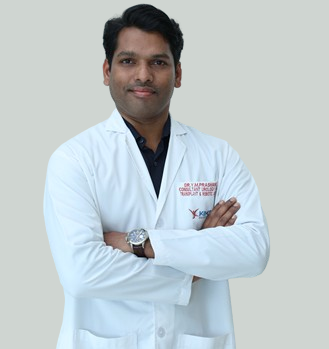
TULSA-PRO specialists at KIMS Secunderabad


FAQ SECTION
Yes — but only at KIMS Secunderabad. KIMS is India's first and only TULSA-PRO centre. The technology is FDA-approved and widely used in Europe and the USA, but KIMS is the sole Indian facility licensed to perform TULSA-PRO procedures. There is no other hospital in India — in any city — that offers this treatment. Call 040 - 44885000 to speak with the KIMS TULSA-PRO team or to book an eligibility assessment.
Most TULSA-PRO patients at KIMS are discharged the same day or the following morning. The procedure itself takes 2 to 4 hours inside the MRI scanner, after which you are observed in the recovery unit for 4 to 6 hours. A urinary catheter is placed before discharge and removed at a follow-up appointment approximately 3 to 5 days later. You can typically resume normal activities — desk work, walking, light activities — within 2 to 5 days of the procedure.
This is the question most men ask first. In the pivotal clinical trial, 75% of men who had functional erectile ability before TULSA-PRO retained erections firm enough for sexual intercourse at 1 year after the procedure. This compares favourably with robotic prostatectomy (40–70% at 1 year, depending on surgeon and nerve-sparing technique) and radiation (40–60% at 1 year, with further decline over subsequent years). TULSA-PRO's preservation of sexual function results from MRI-guided active protection of the neurovascular bundles throughout the ablation — the surgeon can see the nerve structures in real time and actively avoid them.
Yes. TULSA-PRO is approved and used for both localised prostate cancer and symptomatic BPH. For BPH, TULSA-PRO ablates the enlarged obstructing prostate tissue — reducing prostate volume, improving urine flow, and reducing IPSS symptom scores — without TURP, HoLEP, or any incision. Results are comparable to surgical BPH procedures in terms of symptomatic improvement, with significantly better preservation of ejaculation and erectile function. The KIMS eligibility assessment includes uroflowmetry and IPSS score for BPH patients. See our BPH condition page for a full comparison of TULSA-PRO, HoLEP, and TURP.
TULSA-PRO is a focal or whole-gland ablation — it destroys prostate tissue precisely without creating surgical scars or radiation damage in surrounding structures. If PSA rises after TULSA-PRO and biopsy confirms residual or recurrent prostate cancer, all conventional treatment options remain fully available: the procedure can be repeated, robotic prostatectomy can be performed, or external beam radiation can be given. This 'salvage options remain open' characteristic is an important advantage of TULSA-PRO over radiation therapy — where the post-radiation surgical field is significantly more complex.
TULSA-PRO cost at KIMS is available from the KIMS billing and commercial team — contact 040 - 44885000 or email assistance@kimshospitals.com for a personalised cost estimate based on your specific treatment plan (whole-gland vs focal ablation, and any associated pre-procedure investigations). The KIMS team will also advise on insurance coverage — please note that as a new technology, TULSA-PRO coverage varies between insurance providers and is not yet uniformly empanelled under all schemes.