
Kidney Stones Care
Kidney Stone Treatment in Secunderabad — No Open Surgery for Most Patients
If you have been told you have a kidney stone or you are in pain right now and suspect you might — the most important thing to know is this: most kidney stones today can be removed without any surgical cut. At the KIMS Laser Stone Centre in Secunderabad, we use flexible laser telescopes and keyhole techniques to remove kidney stones of almost any size, in a procedure that takes under two hours and sends most patients home the same day or the morning after. KIMS is one of India's pioneer centres for kidney stone surgery, including PCNL and lithotripsy.
At a glance
Condition
Kidney Stones (also called: Renal Calculi · Urolithiasis · Nephrolithiasis)
Specialist at KIMS
Urologist — KIMS Laser Stone Centre, Secunderabad
Primary procedure
RIRS — flexible laser telescope through natural urinary passage. No incision. No cut.
★ Clinical Detail
Expert management of complex and large stones using the latest laser technology to ensure high clearance rates and minimal patient discomfort.
Hospital stay
RIRS: Same day or 1 night · Mini-PCNL: 1–2 nights · ESWL: Day care, no admission
KIMS landmark
One of India's pioneer centres for PCNL and kidney stone lithotripsy
Laser technology
100W+ Holmium laser · Thulium laser (dual technology — most centres: Holmium only)
Insurance
All major private insurance accepted · Cashless available
24/7 Emergency
040 - 44885000 — if stone + fever: go to emergency immediately
Appointments
040 - 44885000 · assistance@kimshospitals.com — respond within 24 hours
What is a kidney stone?
A kidney stone is a hard crystal that forms inside the kidney when minerals and salts in urine become too concentrated. Stones range from the size of a grain of sand to a golf ball. Small stones often pass on their own — painful, but manageable with fluids and pain relief. Larger stones get stuck. When a stone blocks urine flow from the kidney to the bladder, it causes the wave-like pain in the flank, back, or groin that patients describe as the most severe pain they have ever felt.
There are four main types of kidney stones. Calcium oxalate stones make up roughly 80% of all stones and are the most common. Uric acid stones are associated with gout and chronic dehydration. Struvite stones form as a result of recurrent urinary infections. Cystine stones are rare and linked to an inherited metabolic condition. The type of stone you have directly determines the most effective treatment and — more importantly — the prevention strategy.
This is why the KIMS metabolic stone clinic analyses every stone patient's urine profile: not just to remove the stone, but to stop the next one from forming. If a patient experiences severe pain accompanied by fever, chills, or the inability to urinate — go to KIMS Emergency immediately or call 040 - 44885000. These can be signs of a blocked, infected kidney, which is a medical emergency requiring immediate intervention.
Symptoms — how do you know you have a kidney stone?
Kidney stones do not always cause symptoms — smaller stones can sit silently in the kidney for months or years. When a stone moves into the ureter (the tube from the kidney to the bladder), it typically causes intense discomfort.
Severe, sudden pain in the flank — the side of the back just below the ribs
Pain that comes in intense waves, easing briefly before returning
Pain spreading from the flank into the groin or lower abdomen as the stone moves
Blood in the urine — appearing pink, red, or brown (haematuria)
Nausea and vomiting triggered by the severity of the pain
Frequent, urgent need to urinate — sometimes with stinging or burning
Cloudy or foul-smelling urine — may indicate infection alongside the stone
Fever and chills — this means there is infection. This is an emergency.
STONE + FEVER = EMERGENCY
If you have kidney stone pain AND a temperature above 38°C, go to KIMS Emergency immediately or call 040 - 44885000. A stone combined with a blocked, infected kidney (pyonephrosis) can progress to sepsis within hours. Do not wait for a scheduled appointment.
When to see a kidney stone specialist in Secunderabad
See a KIMS urologist if any of the following apply to you: you have had a kidney stone before (without metabolic investigation and prevention, recurrence is likely); an ultrasound or scan has shown a stone in your kidney even if you currently have no pain; you have had two or more urinary tract infections in the past year; you have diabetes, gout, or a family history of kidney stones; or you attended an emergency department for stone pain and were discharged with no follow-up plan.
Early review on your terms is always better than a middle-of-the-night emergency. A stone sitting quietly in the kidney today can move into the ureter tomorrow — causing obstruction, severe pain, and potential kidney damage. Planning its removal when you are well and prepared means a better procedure, a faster recovery, and a prevention plan in place before the next stone starts to form.
How kidney stones are diagnosed at KIMS Secunderabad
Diagnosis begins with your medical history and a physical examination. We then confirm the stone's presence, size, location, and number with imaging. The standard investigation is a CT KUB scan (Computed Tomography of the Kidney, Ureter, and Bladder) without contrast — the gold standard for kidney stones, showing stones as small as 1mm and their exact position in the urinary tract. An ultrasound of the kidneys and bladder is also performed.
Blood and urine tests assess kidney function (creatinine, eGFR), screen for infection, and measure calcium, uric acid, and phosphate. For patients with recurrent stones or a first stone under the age of 40, we perform a 24-hour urine collection — sent to our NABL-accredited laboratory for a full metabolic stone risk profile.
This test identifies exactly which minerals are overloading your urine and determines which dietary changes and medications will reduce your risk of forming another stone.
Diagnostic Checklist
CT KUB: High-resolution mapping to detect even the smallest 1mm stones.
Ultrasound: Non-invasive check for kidney swelling (hydronephrosis).
Blood Panels: Precise assessment of creatinine, eGFR, and electrolyte levels.
Metabolic Profile: 24-hour urine analysis to target the root cause and prevent recurrence.
Kidney stone treatment options at KIMS
The right treatment depends on the stone's size, its location in the kidney or ureter, its type, and your overall health. At KIMS we offer every available option. Your urologist will review your scan and recommend the most appropriate approach.
Option 1 — Watchful waiting (for small stones under 5mm)
Stones smaller than 5mm have a reasonable chance of passing on their own with adequate fluid intake — target 2.5 to 3 litres of water per day — pain relief, and sometimes tamsulosin (a medication that relaxes the ureter to help the stone through). KIMS monitors patients taking this approach with ultrasound and urine tests, and recommends intervention if the stone fails to pass within 4 weeks, causes repeated severe pain, or triggers infection.
Option 2 — ESWL (Extracorporeal Shock Wave Lithotripsy)
ESWL uses focused shock waves generated from outside the body to break smaller, uncomplicated stones — typically under 1.5 cm, in the kidney, without obstruction — into fragments small enough to pass in the urine. No anaesthesia is needed for most patients. It is the least invasive option, but its stone clearance rate is lower than RIRS for kidney stones, and it is less effective for harder stone types. Multiple sessions are sometimes needed to achieve complete clearance.
Option 3 — RIRS (Retrograde Intra-Renal Surgery) ★ KIMS primary technique
RIRS is KIMS's first-choice procedure for kidney stones up to 2 cm — and the most common reason patients specifically travel to KIMS Secunderabad for stone treatment. Most patients are home the same day. A thin, flexible ureteroscope is passed through the urethra, up through the bladder and ureter, into the kidney. Once inside, a laser fibre fragments the stone into fine dust using either our Holmium or Thulium laser. The dust either passes out naturally or is suctioned out. RIRS at KIMS offers: • Best for: Stones up to 2 cm anywhere in the kidney • Stay: Same day or 1 overnight stay • Return to work: Desk work in 2–3 days • Laser: Holmium 100W+ or Thulium laser technology
Option 4 — Mini-PCNL (Miniaturised Percutaneous Nephrolithotomy)
For stones larger than 2 cm, complex stones, or staghorn calculi — Mini-PCNL is the preferred approach. A 5mm pinhole is created in the skin of the back under X-ray guidance. A nephroscope is passed directly into the kidney, and the stone is fragmented and actively removed. Mini-PCNL achieves excellent stone clearance for large stones with far less blood loss and tissue trauma than conventional PCNL. Most patients are discharged after 1 to 2 nights. KIMS is one of India's pioneer centres for PCNL, ensuring high-volume expertise for complex cases.
Option 5 — URS (Ureteroscopy) for ureteric stones
When a stone is lodged in the ureter (the tube between the kidney and the bladder), a semi-rigid ureteroscope is used to reach and laser-fragment the stone. URS is typically a day-care procedure performed under spinal or general anaesthesia, with same-day discharge for most patients. It provides immediate relief from the intense pain caused by ureteric obstruction.
Procedure comparison — which is right for your stone?
Choosing the right procedure depends on the size and location of your stone. This table provides a clear comparison of the most common techniques used at the KIMS Laser Stone Centre to help you understand the best path forward.
| Factor | ESWL | RIRS ★ at KIMS | Mini-PCNL |
|---|---|---|---|
| Best for | Small stones < 1.5 cm in kidney | Stones up to 2 cm, any kidney location | Stones > 2 cm or complex stones |
| Incision | None | None | 5mm pinhole in back |
| Anaesthesia | Usually none | Spinal or general | General |
| Hospital stay | Day care — no admission | Same day or 1 night | 1–2 nights |
| Stone clearance | Moderate (varies by type) | Very high for stones up to 2 cm | Very high for large stones |
| Works on hard stones? | Limited | Yes — Holmium / Thulium laser | Yes — laser or pneumatic |
| Blood thinners? | Must stop beforehand | Often safe — discuss with KIMS | Must stop beforehand |
| Return to work | 1–2 days | 2–3 days | 3–5 days |
Note: This comparison serves as a general guide. The final choice of procedure is determined by your KIMS urologist after reviewing your CT scan, kidney function, and overall health status to ensure the highest safety and success rates.
Why patients choose KIMS Secunderabad for kidney stone treatment
KIMS Laser Stone Centre combines historical expertise with the latest dual-laser technology to provide comprehensive care from emergency removal to long-term prevention.
Pioneers in Minimally Invasive Stone Surgery
KIMS Hospitals is one of the pioneers in India to perform PCNL and kidney stone lithotripsy. This verifiable, historic distinction means our urologists have been performing these procedures at high volume since before they became the national standard of care.
Dual Laser Technology — Holmium AND Thulium
KIMS operates both 100W+ Holmium and Thulium laser systems. Having both allows our surgeons to choose the right tool for each stone. Thulium laser fragments stones more finely, making it safer for patients on blood thinners or with complex stone locations.
Dedicated Laser Stone Centre
Stone surgery at KIMS takes place in a dedicated centre with its own infrastructure and experienced theatre team. High-volume, dedicated stone programmes consistently outperform general urology departments for stone clearance and safety.
Metabolic Stone Clinic for Prevention
Removing the stone is only half the job. KIMS runs a dedicated metabolic stone clinic providing 24-hour urine risk profiles and personalized dietary plans. Patients in this programme have a significantly lower rate of recurrence than those treated with surgery alone.
Same-Day Discharge for RIRS Patients
RIRS at KIMS is designed as a day-care procedure. Theatre scheduling and recovery pathways are built around early discharge, meaning most RIRS patients are home by the evening or the next morning without unnecessary hospital stays.
Backed by a 1,000-Bed Tertiary Hospital
KIMS Secunderabad is not a standalone clinic. If a procedure reveals unexpected complications like infection or anatomical abnormalities, every medical specialist and advanced ICU facility needed is immediately available on the same campus.
Start Kidney Stones Care at KIMS
Recovery — what to expect after kidney stone surgery at KIMS
Recovery times vary depending on the surgical approach, but KIMS ensures a coordinated care pathway from hospital discharge to complete stone-free status.
After RIRS
You will typically be discharged the same evening or the following morning. You will have a ureteric stent (a soft plastic tube) inside to hold the ureter open during healing. This may cause increased frequency or mild discomfort. The stent is removed 2 to 4 weeks later in a quick 5-minute outpatient appointment at KIMS — no anaesthesia required. Desk work can typically resume within 2 to 3 days.
After Mini-PCNL
You will typically stay 1 to 2 nights. A nephrostomy tube — a small drainage tube through the back pinhole — allows the kidney to drain until output is minimal, then it is removed before discharge. Most patients are comfortable and walking within 12 to 24 hours. Return to desk work is usually 3 to 5 days after discharge. Heavy physical activity should be avoided for 2 to 3 weeks.
Follow-up & Clearance
For all surgical procedures, a follow-up scan is performed 4 to 6 weeks after discharge to confirm complete stone clearance. We also schedule your first Metabolic Stone Clinic appointment at this stage to analyze your stone composition and blood/urine chemistry to prevent future stones from forming.
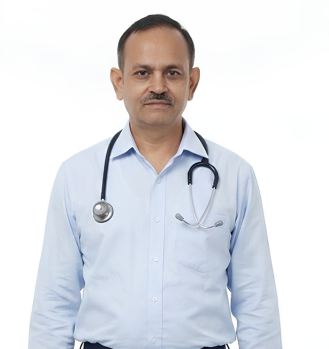
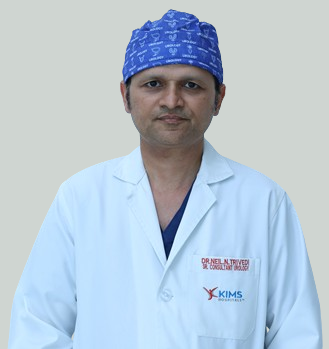
Our kidney stone specialists at KIMS Secunderabad
Our urology and stone management teams work as one unit, utilizing advanced RIRS, Mini-PCNL, and laser lithotripsy to ensure complete stone clearance with minimal downtime.






Frequently Asked Questions
Yes — for most patients at KIMS Secunderabad. RIRS (Retrograde Intra-Renal Surgery) removes kidney stones up to 2 cm through the natural urinary passage using a flexible laser telescope — no incision is made anywhere on the body. The procedure takes 45 to 90 minutes under anaesthesia, and most patients are home the same day or the following morning. For larger stones, Mini-PCNL uses a 5mm pinhole in the back — far smaller than conventional kidney surgery. Open stone surgery is rarely required at KIMS.
RIRS (Retrograde Intra-Renal Surgery) is a minimally invasive procedure for removing kidney stones without any surgical incision. A flexible telescope is passed through the urethra into the kidney, where a laser fragments the stone into dust. Yes, RIRS is available at the KIMS Laser Stone Centre in Secunderabad. KIMS is one of India's pioneer centres for stone procedures and operates both advanced Holmium and Thulium laser systems.
At KIMS Secunderabad: RIRS takes 45 to 90 minutes — most patients are discharged the same day or the next morning. Mini-PCNL takes 1 to 2 hours with a 1 to 2 night stay. After RIRS, you will have a ureteric stent for 2 to 4 weeks — removed in a 5-minute outpatient appointment. Most desk-job patients return to work within 2 to 3 days of discharge.
Without prevention, about 50% of patients form another stone within 10 years. The KIMS Metabolic Stone Clinic performs a 24-hour urine stone risk profile and blood tests after your procedure to identify exactly why the stone formed. By following a personalised dietary and medical prevention plan, our patients have a significantly lower rate of recurrence than those treated with surgery alone.
RIRS is generally safe for patients who cannot stop blood-thinning medications (like aspirin or warfarin) because no incision is made. The procedure is performed entirely through the natural urinary passage. This is a critical advantage for patients with heart conditions or recent stents. Your KIMS urologist will review your medications and advise on any minor adjustments needed before the procedure.
KIMS Secunderabad's Laser Stone Centre is one of the region's most experienced programmes. We are pioneers in PCNL and lithotripsy, operating both Holmium and Thulium lasers (most centres use Holmium only). With a dedicated metabolic clinic for prevention and the backing of a 1,000-bed multispecialty hospital, we provide a level of safety and comprehensive care that standalone clinics cannot match.
Dietary advice depends on your specific stone type. Generally: drink 2.5 to 3 litres of water daily and reduce salt. For calcium oxalate stones, limit spinach, nuts, and chocolate but maintain normal dietary calcium. For uric acid stones, reduce red meat and seafood. A personalised plan from the KIMS Metabolic Stone Clinic, based on your 24-hour urine analysis, is always more effective than a generic list.
No. KIMS Secunderabad is empanelled under CGHS, and accepts all major private health insurance. Cashless admission is available for most private insurance plans. Call 040 - 44885000 or email assistance@kimshospitals.com to verify your coverage.